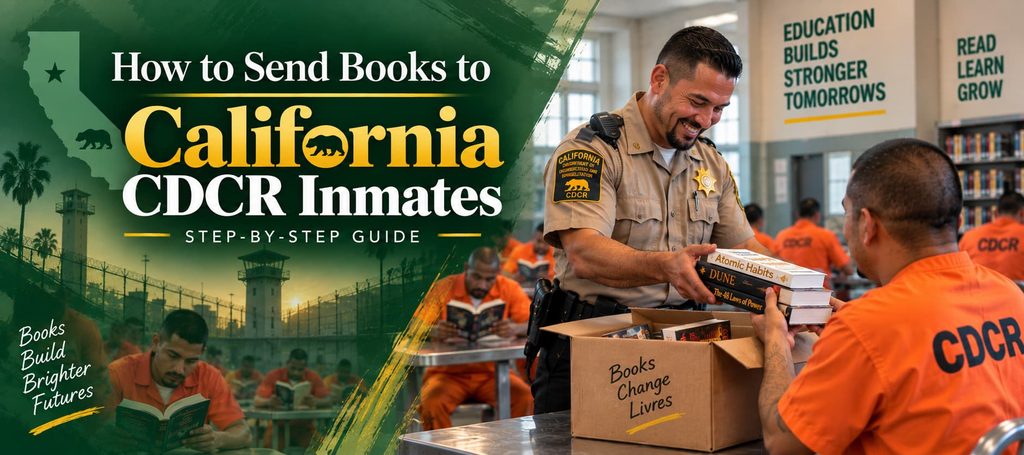
Books can provide education, entertainment, encouragement, and connection for incarcerated loved ones. However, California state prisons have specific requirements governing incoming publications.
Families who want to send books to CDCR inmates should understand the rules before ordering. The book source, content, recipient information, and institution requirements can all affect whether a publication is accepted.
California Corrections BookStore provides a convenient, correctional-focused option for families who want to send books to California prison facilities.
What Does CDCR Mean?
CDCR stands for the California Department of Corrections and Rehabilitation, which operates California’s state prison system.
Families who send books to CDCR inmates need to follow applicable CDCR regulations as well as relevant institution procedures. Before ordering, confirm:
- Recipient’s full name
- CDCR number
- Current institution
- Correct mailing address
- Current publication requirements
Checking these details first directly through the California Incarcerated Records and Information Search (CIRIS) can prevent simple mistakes.
Can Families Send Books to CDCR Inmates?
Yes, incarcerated people can receive qualifying books under applicable California regulations. However, families who send books to CDCR inmates generally cannot package books at home and send them as ordinary personal correspondence.
Books generally need to come directly from qualifying sources such as:
- Bookstores
- Book distributors
- Mail-order publishers
- Religious organizations
- Departmentally approved vendors
Always review current requirements before you send books to California prison.
Step 1: Find the Correct CDCR Institution
The first step is confirming where your loved one is currently housed. Before you send books to CDCR inmates, verify the institution because incarcerated individuals may be transferred.
Check:
- Full legal name
- CDCR number
- Institution
- Mailing address
- Housing details when required
Using outdated information can create delivery problems.
Step 2: Check Current CDCR Book Rules
California correctional publication requirements can change.
Families preparing to send books to CDCR inmates should review current CDCR guidance rather than relying on old information from forums or social media.
Pay attention to:
- Publication sources
- Content restrictions
- Property limits
- Book formats
- Mailing requirements
- Institution procedures
Checking current rules is equally important when you send books to California prison for the first time.
Step 3: Use an Appropriate Book Source
Where the book comes from matters. Current California regulations generally allow books to come directly from bookstores, book distributors, mail-order publishers, religious organizations, or departmentally approved vendors.
Families who send books to CDCR inmates should therefore use an appropriate source rather than mailing personal books from home.
California Corrections BookStore helps families shop for reading materials intended for incarcerated loved ones.
Step 4: Choose Suitable Books
Choosing books that match the recipient’s interests can make every order more meaningful. Families who send books to CDCR inmates can consider fiction, educational, self-help, career, financial literacy, and inspirational titles.
Always check current CDCR requirements before ordering, because acceptance of any specific title is ultimately determined by the correctional facility.
Fiction Books
Fiction can provide entertainment, encourage imagination, and help readers develop consistent reading habits. Popular titles to consider include:
- The Old Man and the Sea by Ernest Hemingway
- The Count of Monte Cristo by Alexandre Dumas
- The Alchemist by Paulo Coelho
- To Kill a Mockingbird by Harper Lee
- The Hobbit by J.R.R. Tolkien
- A Tale of Two Cities by Charles Dickens
Families who send books to CDCR inmates can choose fiction based on the reader’s preferred authors and genres.
Self-Help and Personal Development Books
Self-help books can encourage reflection, goal setting, discipline, and positive habits. Popular titles include:
- Atomic Habits by James Clear
- The 7 Habits of Highly Effective People by Stephen R. Covey
- Man’s Search for Meaning by Viktor E. Frankl
- The Four Agreements by Don Miguel Ruiz
- How to Win Friends and Influence People by Dale Carnegie
These can be meaningful choices when families send books to California prison for personal development.
Educational and Reference Books
Educational books can help incarcerated readers strengthen academic skills and continue learning independently. Useful titles and resources may include:
- Merriam-Webster’s Collegiate Dictionary
- The Elements of Style by William Strunk Jr. and E.B. White
- Everything You Need to Ace Math in One Big Fat Notebook
- Everything You Need to Ace Science in One Big Fat Notebook
- Practice Makes Perfect: Complete Spanish Grammar by Gilda Nissenberg
When you send books to CDCR inmates, consider the reader’s current education level and subjects they want to study.
Career and Business Books
Career-focused books can introduce readers to workplace skills, entrepreneurship, leadership, and professional development. Popular options include:
- What Color Is Your Parachute? by Richard N. Bolles
- The Lean Startup by Eric Ries
- Start With Why by Simon Sinek
- Good to Great by Jim Collins
- The Personal MBA by Josh Kaufman
These books can be useful for readers interested in preparing for future employment or business opportunities.
Financial Literacy Books
Financial education can help readers understand budgeting, saving, investing concepts, and responsible money management. Popular titles include:
- The Total Money Makeover by Dave Ramsey
- The Psychology of Money by Morgan Housel
- The Richest Man in Babylon by George S. Clason
- I Will Teach You to Be Rich by Ramit Sethi
- Your Money or Your Life by Vicki Robin and Joe Dominguez
Financial literacy books are practical options for families who want to send books to California prison with long-term learning in mind.
Inspirational and Motivational Books
Inspirational reading can provide encouragement and help readers think about resilience, purpose, and personal growth. Titles to consider include:
- Make Your Bed by William H. McRaven
- The Alchemist by Paulo Coelho
- The Power of Positive Thinking by Norman Vincent Peale
- As a Man Thinketh by James Allen
- The Obstacle Is the Way by Ryan Holiday
Families who send books to CDCR inmates can select motivational titles based on the recipient’s individual interests and goals.
Biographies and Memoirs
Biographies can combine education with engaging real-life stories. Popular choices include:
- Long Walk to Freedom by Nelson Mandela
- Narrative of the Life of Frederick Douglass by Frederick Douglass
- The Autobiography of Benjamin Franklin by Benjamin Franklin
- Shoe Dog by Phil Knight
- Educated by Tara Westover
Biographies can be especially engaging for readers interested in history, perseverance, leadership, and personal transformation.
Classic Literature
Classic books can provide substantial reading value and introduce readers to influential literature. Consider titles such as:
- The Odyssey by Homer
- The Great Gatsby by F. Scott Fitzgerald
- A Tale of Two Cities by Charles Dickens
- The Adventures of Huckleberry Finn by Mark Twain
- The Call of the Wild by Jack London
Before families send books to CDCR inmates, they should still verify that the particular title, edition, format, and content comply with current CDCR and receiving-institution requirements. and goals.
Step 5: Check Publication Restrictions
Not every commercially available book will necessarily be accepted. When families send books to CDCR inmates, publications remain subject to applicable CDCR inspection and content rules.
Restrictions may relate to:
- Institutional security
- Contraband
- Prohibited content
- Criminal activity instructions
- Certain sexual content
- Other restricted material
Review current rules before purchasing a potentially sensitive title.
Step 6: Check Book Format and Property Limits
Book format can also matter. Before you send books to CDCR inmates, review current requirements for paperback and hardcover publications.
Families should also consider inmate property limits. Even an otherwise acceptable book can create an issue if the recipient has reached applicable property limits.
Checking both factors before you send books to California prison can reduce unnecessary problems.
Step 7: Enter Accurate Recipient Information
Correct information is essential for correctional book deliveries. Before you send books to CDCR inmates, double-check:
- Full name
- CDCR number
- Institution
- Correct mailing address
- Housing information when necessary
CDCR guidance calls for the incarcerated person’s name and department identification number along with the institution-designated mailing address.
Verify every detail before checkout.
Step 8: Review the Order
Before completing your purchase, perform one final check. Families who send books to CDCR inmates should review:
- Selected titles
- Book formats
- Quantity
- Recipient name
- CDCR number
- Institution
- Delivery address
A quick review can catch simple errors before the order is submitted.
Tips for Choosing Books CDCR Inmates Will Enjoy
Following the rules is important, but choosing a book your loved one actually wants to read matters too. Before you send books to CDCR inmates, consider:
- Favorite authors
- Preferred genres
- Reading level
- Educational interests
- Career goals
- Hobbies
- Personal development goals
A carefully chosen book can provide much more value than a random bestseller.
Avoid Mailing Books From Home
This is one of the most important requirements for families to understand. Books and periodicals generally cannot be sent through ordinary personal mail under current California regulations.
Families who want to send books to CDCR inmates should use a qualifying commercial or organizational source. This distinction is important whenever you send books to California prison.
How California Corrections BookStore Helps
California Corrections BookStore focuses on helping families find books for incarcerated loved ones. Families looking to send books to CDCR inmates can browse categories such as:
- Fiction
- Educational books
- Self-help resources
- Inspirational reading
- Career books
- Reference materials
- Other useful titles
Our goal is to make book selection and ordering easier for families who want to send books to California prison facilities.
Common Mistakes to Avoid
Families who send books to CDCR inmates can avoid several common problems.
Using Outdated Inmate Information
Always confirm the recipient’s current institution and CDCR number.
Mailing Personal Books
Do not assume books can be packaged at home and mailed as ordinary correspondence.
Choosing Restricted Content
Review applicable publication rules before ordering.
Using the Wrong Address
Verify the institution’s current inmate mailing address.
Ignoring Property Limits
Check relevant property requirements before ordering multiple books. Avoiding these mistakes can make it easier to send books to California prison.
Quick CDCR Book Sending Checklist
Before you send books to CDCR inmates, check:
- Recipient’s full name
- CDCR number
- Current institution
- Correct mailing address
- Current CDCR publication rules
- Book content
- Book format
- Applicable property limits
- Permitted book source
- Complete order details
A few minutes of preparation can help prevent avoidable ordering problems.
Frequently Asked Questions
How do I send books to CDCR inmates?
Confirm the recipient’s information, review current CDCR requirements, select suitable books, and order from a source permitted under applicable California regulations.
Can I personally mail books to a CDCR inmate?
Generally, books and periodicals cannot be sent through ordinary personal correspondence. Use an appropriate bookstore, distributor, mail-order publisher, religious organization, or other permitted source.
What books can I send?
Fiction, educational, self-help, career, reference, inspirational, and other appropriate publications may be suitable when they comply with applicable requirements.
What information do I need?
Have the recipient’s full name, CDCR number, current institution, and correct mailing address before ordering.
How can I send books to California prison without common mistakes?
Verify inmate information, check current CDCR and institution requirements, choose appropriate books, and review all order details before checkout.
Contact Us
If you have any other questions or queries related to our services, feel free to contact us at:
- Phone: +1 213 652 4212
- Email: info@cacorrectionsbookstore.com
- Website: CaliforniaCorrectionsBookStore.com
We’re here to serve you.
Final Thoughts on How to Send Books to CDCR Inmates
Families who want to send books to CDCR inmates should verify recipient information, review current publication requirements, choose suitable reading materials, and use an appropriate book source.
California Corrections BookStore helps families explore fiction, educational, self-help, career, inspirational, reference, and other books for incarcerated loved ones.
Following the correct steps can make it easier to send books to California prison while providing meaningful reading materials for education, recreation, and personal growth.