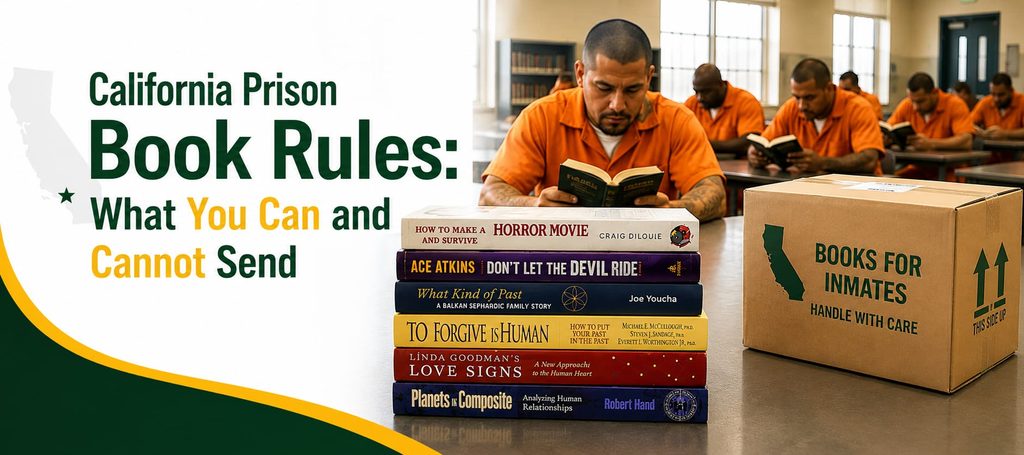
Sending books to an incarcerated loved one can provide entertainment, education, encouragement, and personal growth. However, families need to understand California prison book rules before placing an order.
Prison book rules determine how books must be sent, where they can come from, what information must appear on the shipment, and what types of publications may be restricted.
California Corrections BookStore helps families find reading materials for incarcerated loved ones while making correctional book ordering more convenient.
Why California Prison Book Rules Matter
California prison book rules are designed to control incoming publications while supporting institutional safety and security.
Understanding the requirements can help families:
- Choose suitable books
- Use an appropriate book source
- Avoid prohibited materials
- Provide correct recipient information
- Reduce preventable delivery problems
Families should review these policies before every order because institutional procedures can change.
Can You Send Books to California Prison Inmates?
Yes. California prison book rules generally allow incarcerated people to receive books from qualifying commercial or organizational sources.
Books may generally come directly from:
- Bookstores
- Book distributors
- Mail-order publishers
- Religious organizations
- Departmentally approved vendors
California prison book rules generally do not allow books and periodicals to arrive through ordinary personal mail. That means families should order books through an appropriate source rather than packaging books at home.
What Books Can You Send?
California prison book rules do not limit families to one specific genre. Depending on content and facility requirements, families can send Send Books to California Prison including:
- Fiction
- Educational books
- Dictionaries
- Self-help books
- Career guides
- Financial literacy books
- Inspirational books
- Religious texts
- Biographies
- Reference materials
The most important factor is that the publication complies with California prison book rules and applicable institutional requirements.
Fiction Books
Fiction can provide entertainment and encourage regular reading. Families following California prison book rules may consider:
- Mystery
- Historical fiction
- Adventure
- Classic literature
- Science fiction
- Inspirational fiction
Choosing books based on the reader’s interests can make the order more meaningful.
Educational Books
Educational reading is another useful option. California prison book rules generally allow appropriate educational publications when they comply with applicable content and property requirements.
Useful categories include:
- Dictionaries
- Language books
- Study guides
- History books
- Science books
- Vocational resources
These titles can support continued learning during incarceration.
Self-Help and Personal Development Books
Many families choose self-improvement materials. Under California prison book rules, suitable titles may focus on:
- Motivation
- Communication
- Goal setting
- Financial literacy
- Leadership
- Career planning
- Personal development
Families should still check the content of individual titles before ordering.
What You Cannot Send Through Personal Mail
One of the most important California prison book rules concerns personal correspondence. Books and periodicals generally cannot be included in ordinary personal mail.
Families should not:
- Place books inside personal packages
- Mail books directly from home as correspondence
- Treat books like ordinary letters
- Assume a personal shipment will be accepted
Instead, California prison book rules generally require books to come directly from an eligible bookstore, distributor, publisher, religious organization, or permitted vendor.
Prohibited Book Content
California prison book rules allow correctional officials to inspect incoming publications. A publication may be disapproved if it violates applicable regulations or creates institutional safety or security concerns.
Potential problems can include material involving:
- Contraband
- Criminal activity instructions
- Security threats
- Prohibited sexual content
- Gang-related material
- Other content restricted by CDCR regulations
Families should review California prison book rules before selecting potentially sensitive titles.
Paperback and Hardcover Books
Families often ask whether paperback or hardcover books are permitted. California prison book rules provide for inspection of incoming books. CDCR materials also describe procedures for paperback and hardback publications.
Hardcover books may be subject to additional handling procedures. Because institutional practices can vary, families should verify current rules and local procedures before choosing a particular format.
Are There Limits on How Many Books an Inmate Can Receive?
California prison book rules do not generally impose a frequency limit on book deliveries, but incarcerated people remain subject to personal property limits. So, it
CDCR guidance indicates that property limits can affect how many books an incarcerated person can possess at one time.
Before ordering multiple titles, families should:
- Check current property limits
- Ask the recipient what books they already have
- Avoid sending more books than can reasonably be stored
- Review institution-specific procedures
This helps families follow California prison book rules while avoiding unnecessary complications.
Correct Inmate Information Is Required
California prison book rules also require properly addressed incoming mail. Before placing an order, verify:
- Incarcerated person’s full name
- CDCR number
- Institution
- Correct mailing address
- Housing information when required
Incorrect information can cause delays or prevent delivery. Checking recipient information is one of the simplest ways to follow California prison book rules correctly.
Check the Institution Mailing Address
A prison’s general street address may not be the same as the correct mailing address for incarcerated people. Families should confirm:
- Institution name
- Facility or housing details
- PO Box when applicable
- City
- State
- ZIP code
California prison book rules work together with institution-specific mailing instructions. Always verify the latest address before placing an order.
Can You Send Used Books?
Families sometimes search prison book rules because they want to send inexpensive used books. Acceptance can depend on the source, condition, and applicable institutional requirements.
Used books may be more likely to raise concerns if they contain:
- Handwritten notes
- Added photographs
- Loose items
- Alterations
- Inserts
- Materials not originally part of the publication
For a smoother ordering experience, families should review California prison book rules before purchasing used publications.
Can You Send Religious Books?
Yes, appropriate religious publications can generally be sent through permitted sources. California prison book rules allow publications from religious organizations, and religious texts do not necessarily need to come from a vendor on a separate religious property vendor list.
Possible choices include:
- Bibles
- Qurans
- Torah-related materials
- Devotional books
- Spiritual study guides
- Inspirational religious books
All publications remain subject to applicable California prison book rules.
How California Corrections BookStore Helps Families
Understanding California prison book rules can feel confusing for families ordering books for the first time.
California Corrections BookStore helps families find reading materials for incarcerated loved ones.
Customers can explore:
- Fiction books
- Educational materials
- Self-help books
- Inspirational titles
- Reference resources
- Career books
- Other useful reading categories
Our goal is to simplify book selection while helping families keep California prison book rules in mind before ordering.
Common California Prison Book Ordering Mistakes
Families can avoid many problems by understanding California prison book rules before checkout.
Mailing Books From Home
Personal correspondents generally cannot mail books directly as ordinary personal mail Use an eligible book source.
Choosing Restricted Content
Not every commercially available publication will be accepted. Review California prison book rules before selecting sensitive material.
Using Incorrect Inmate Information
Always verify the recipient’s full name and CDCR number.
Using the Wrong Address
Confirm the institution’s current inmate mailing address.
Ignoring Property Limits
California prison book rules operate alongside inmate property requirements. Avoid sending more books than the recipient can possess.
California Prison Book Rules Checklist
Before ordering, use this quick checklist:
- Verify the recipient’s full name
- Confirm the CDCR number
- Check the institution
- Verify the correct mailing address
- Review prison book rules
- Choose suitable book content
- Confirm the book source is permitted
- Check applicable property limits
- Review your order before checkout
Following these steps can make the ordering process much easier.
Frequently Asked Questions About California Prison Book Rules
What are the main California prison book rules?
Books generally need to come directly from qualifying bookstores, book distributors, mail-order publishers, religious organizations, or other permitted sources. Publications are also subject to inspection and content restrictions.
Can I mail a book directly from my home?
Generally, no. California prison book rules do not generally allow incarcerated people to receive books through ordinary personal mail.
Are paperback books allowed?
Paperback books can generally be received when they meet applicable CDCR and institutional requirements.
Are hardcover books allowed?
Hardcover books may be subject to additional inspection or handling procedures. Families should check current California prison book rules and the receiving institution’s procedures before ordering.
Can inmates receive educational books?
Yes. Appropriate educational books, study materials, dictionaries, career resources, and reference publications may be sent when they comply with applicable requirements.
Can books be rejected?
Yes. Publications can be disapproved if they violate applicable California prison book rules, property rules, or institutional security requirements.
Contact Us
If you have any other questions or queries related to our services, feel free to contact us at:
- Phone: +1 213 652 4212
- Email: info@cacorrectionsbookstore.com
- Website: CaliforniaCorrectionsBookStore.com
We’re here to serve you.
Final Thoughts on California Prison Book Rules
Understanding California prison book rules helps families choose suitable books, use an appropriate source, provide correct inmate information, and avoid common delivery mistakes.
California Corrections BookStore helps families find fiction, educational, self-help, inspirational, reference, and other reading materials for incarcerated loved ones.
Before every order, review current California prison book rules and the receiving institution’s instructions. Careful planning can make sending meaningful books to an incarcerated loved one much simpler.